
Open a language app today and you may translate a sentence, review a forgotten word, listen to a native speaker, and role-play with an AI tutor within ten minutes. The history of language learning methods sits behind those apparently modern activities, which often rest on ideas developed decades or even centuries ago.
This history of language learning methods follows that progression from grammar books to adaptive software. You will see what each generation tried to fix, which modern tools inherited its techniques, and how to combine the useful parts without committing to one rigid system.
A history of language learning methods at a glance
There is no official master list of language learning methods. Applied linguists also distinguish an approach, which expresses a theory of learning, from a method, which specifies teaching procedures, and a technique, such as shadowing or flashcard review. Commercial products often combine all three.
The timeline below uses “method” in the broader learner-facing sense. The final column matters most: older ideas rarely disappear. They return inside new courses, apps, and interfaces.
| Period | Method or movement | Main objective | Core practice | Modern descendants |
|---|---|---|---|---|
| Late 18th to 19th century | Grammar-Translation | Read and analyze texts | Rules, bilingual vocabulary, translation | Textbooks, grammar courses, translation exercises |
| 1870s to 1900s | Natural, Series, and Direct Methods | Learn through the target language | Demonstration, questions, connected actions | Berlitz, immersion classes, Rosetta Stone |
| 1900s to 1930s | Oral and recorded self-study | Develop listening and speech at scale | Controlled speech, dialogues, recordings | Linguaphone, Assimil, audio courses |
| 1940s to 1960s | Army, Audio-Lingual, and audiovisual methods | Automate useful patterns quickly | Dialogue memorization, drills, immediate correction | Callan, pronunciation drills, structured audio practice |
| 1960s to 1980s | Designer and humanistic methods | Reduce inhibition or increase autonomy | Movement, discovery, group support | TPR activities, learner-centered classes |
| 1970s to 1990s | Natural, communicative, task-based, and immersion approaches | Understand and communicate meaning | Input, interaction, tasks, learning through content | Tutoring, comprehensible input, CLIL |
| 1970s to present | Spaced retrieval and lexical learning | Retain useful words and phrases | Recall, spacing, collocations, chunks | Anki, SuperMemo, sentence mining |
| 1990s to 2010s | Digital, adaptive, and gamified courses | Make structured practice widely accessible | Multimedia lessons, personalization, rewards | Rosetta Stone, Duolingo, Babbel, Busuu |
| 2010s to present | Conversation platforms and AI tutors | Increase speaking access and feedback | Live tutoring, exchanges, generated role-play | italki, Preply, Speak, ChatGPT |
1. Grammar first: the Grammar-Translation tradition
For much of European educational history, studying another language meant studying Latin or Greek. The goal was access to literature and intellectual training, not an unscripted conversation with a shopkeeper. The Grammar-Translation Method carried this model into modern language teaching from the late 18th century onward.
Learners studied explicit rules, memorized bilingual vocabulary lists, translated sentences, and read difficult texts. Lessons emphasized grammatical accuracy, reading, and writing. Pronunciation and spontaneous conversation received little attention. The teacher explained the system; the learner analyzed and applied it.
The method is often treated as an obsolete villain, but that verdict is too simple. Explicit instruction can help learners understand difficult structures. A meta-analysis of 41 studies found larger effects for explicit than implicit grammar instruction across both simple and complex features. The result supports focused explanation, not a complete curriculum based on translation.
Grammar-Translation struggled with transfer. You may know why a verb needs a particular ending and still fail to retrieve it during a fast conversation. That gap between stated knowledge and real-time use explains the next major shift. Teachers began asking whether learners should encounter meaning directly instead of processing every sentence through their first language.
What survives today: grammar books, bilingual word lists, translation exercises, test preparation, and explicit explanations inside modern apps. These tools work best when you follow analysis with listening, retrieval, and meaningful use.
2. The oral revolt: learn the language through the language
During the late 19th century, reformers challenged the assumption that learning a language meant translating it. Their alternatives differed, but they shared three priorities: spoken language, direct links between words and meaning, and examples before abstract rules.
Gouin’s Series Method
François Gouin published his Series Method in 1880. Learners practiced connected sentences describing a sequence of actions: walking toward a door, reaching for the handle, opening it, and leaving the room. The sequence made each phrase easier to understand and remember because language followed an observable event.
Gouin’s exact system did not become the dominant model, but its core idea remains familiar. Modern lessons often teach verbs, transitions, and sentence patterns through a coherent scene rather than an unrelated list.
The Direct and Berlitz Methods
The broader Direct Method taught through the target language. Teachers used objects, pictures, gestures, questions, and demonstrations instead of translation. Speaking and listening came before extensive reading, while grammar emerged inductively from examples.
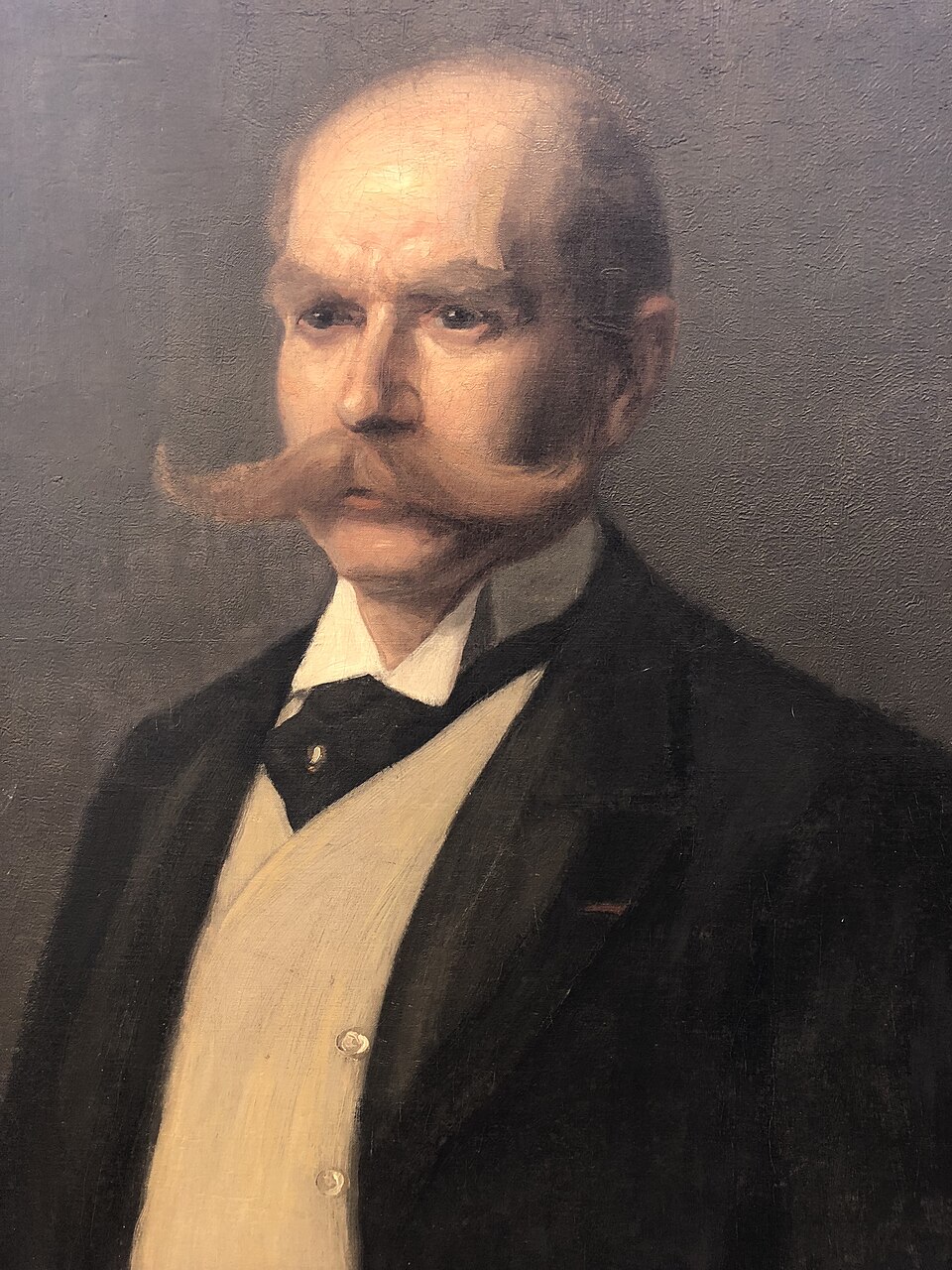
Maximilian Berlitz turned these principles into the named Berlitz Method in 1878. Berlitz still describes its method as immersive: teacher and learner use the target language, discuss realistic situations, and practice grammar in context. Historical research shows that Berlitz was one influential participant in a wider reform movement, not the sole inventor of direct teaching.

Modern guidance preserves the useful core without requiring absolute monolingualism. ACTFL recommends extensive target-language use, supported by visuals, modeling, context, and comprehension checks. It also recognizes strategic first-language use when that prevents confusion or wasted time.
What survives today: immersion classes, target-language tutoring, visual explanations, inductive grammar, and products that avoid translation. Rosetta Stone is a digital descendant: its lessons connect images, audio, and written forms so that learners infer meaning from context.
3. Recorded courses, pattern drills, and language at scale
The 20th century introduced a practical challenge: how could institutions and publishers teach spoken language to large numbers of people? Phonographs, radio, filmstrips, language laboratories, and standardized courses made speech reproducible. They also encouraged tightly controlled sequences.
Palmer’s Oral Method and Linguaphone
Harold E. Palmer gave the oral movement a systematic form. His 1921 book, The Oral Method of Teaching Languages, described conversational techniques and graduated oral practice. Palmer emphasized listening, phonetics, controlled vocabulary, and useful sentence patterns before unrestricted production.
The Linguaphone Method, established by Jacques Roston in 1901, brought recorded native speech into home study. Its enduring sequence is “Listen, Understand, Speak.” Learners followed recorded lessons with illustrated texts, allowing pronunciation and listening practice without a resident teacher.
Assimil and the passive-active sequence
Alphonse Chérel founded Assimil in 1929. The method organizes self-study around short dialogues, audio, translations, notes, and gradual repetition. Its distinctive feature is a two-stage progression. During the passive phase, you read and listen without trying to produce everything. During the active phase, you return to earlier lessons and reconstruct the target language.
This passive-active design combines exposure with delayed retrieval. The company still describes its courses as moving from an initial phase of absorption to active production. It offers more support than a strict Direct Method because translation and explanation remain available.
The Army Method and Audio-Lingual Method
World War II increased demand for rapid oral training in strategically important languages. The U.S. Army Specialized Training Program worked with universities and linguists to provide intensive instruction. Native informants, dialogue practice, and concentrated contact helped establish what became popularly known as the Army Method.
The later Audio-Lingual Method combined that oral emphasis with structural linguistics and behaviorist psychology. Students memorized dialogues, repeated models, substituted words into sentence frames, and received quick correction. The aim was to establish accurate habits before errors became entrenched.
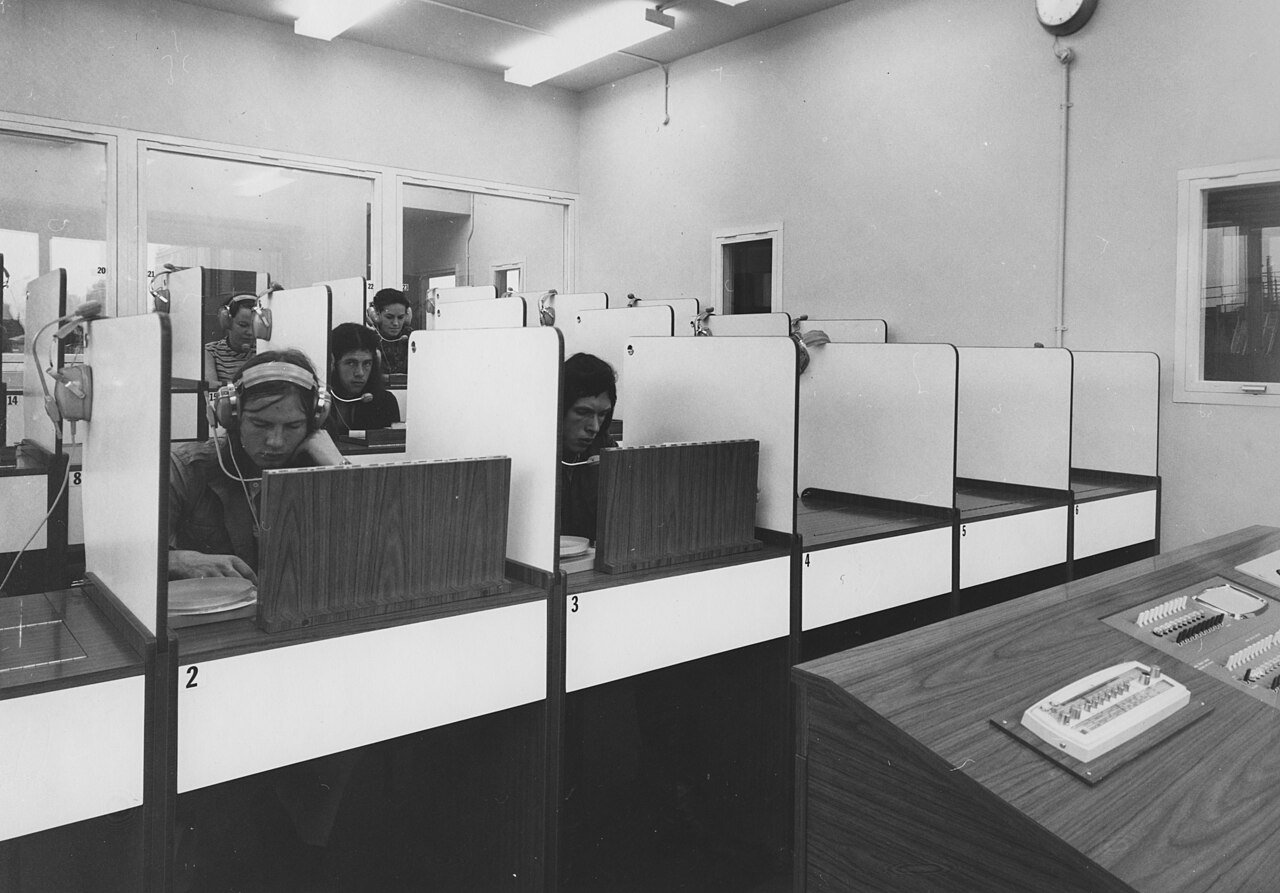

Drills can make a sound contrast or phrase easier to produce. They do not guarantee flexible conversation. The University of Oregon’s teaching-methodology overview describes this boundary clearly: scripted practice can build procedural knowledge, but learners still need opportunities to improvise.
SGAV and the Callan Method
Between 1952 and 1954, Petar Guberina and Paul Rivenc developed the Structuro-Global Audio-Visual Method, or SGAV. Dialogues, recorded speech, visual scenes, intonation, and complete situations worked together. The method became particularly influential in French-language teaching.
Robin Callan developed another tightly scripted oral system around 1960. In the Callan Method, teachers ask rapid questions, learners answer in full sentences, mistakes receive immediate correction, and material returns through systematic revision. It keeps the Direct Method’s target-language environment but adds greater speed and control.
What survives today: pronunciation drills, listen-and-repeat exercises, model dialogues, audio courses, speech recognition, and tightly sequenced oral practice. Used selectively, these activities develop accuracy and automaticity. Used alone, they leave too little room for choosing what you want to say.
4. Designer methods and structured self-study
By the 1960s, teachers were questioning both translation-heavy classrooms and mechanical drilling. A group of strongly branded “designer methods” proposed new roles for the body, emotion, group, and teacher. At the same time, individual course creators refined structured systems for independent adults.
Silent Way, Total Physical Response, and Community Language Learning
Caleb Gattegno described the Silent Way in 1963. The teacher speaks as little as possible and uses colored rods or sound charts to create problems learners must solve. Silence transfers responsibility to the class, while discovery is supposed to build independence and attention.
James Asher developed Total Physical Response (TPR) during the 1960s. Learners first respond physically to instructions such as “stand up” or “put the red book under the chair.” Speaking can wait until comprehension feels secure. A review of embodied language learning reports learning, motivational, and emotional benefits, while noting that research concentrates on vocabulary and beginners.
Charles Curran’s Community Language Learning treated the teacher as a counselor and learners as members of a supportive group. Students decided what they wanted to communicate, received help expressing it, and reflected on the exchange. The method made classroom anxiety and interpersonal trust part of the teaching design.
Suggestopedia
Georgi Lozanov’s Suggestopedia used music, relaxation, comfortable surroundings, and dramatic presentation to reduce psychological barriers. It received considerable attention during the 1970s, including discussion in UNESCO publications. That attention should not be mistaken for certification of its strongest claims.
Its durable lesson is narrower: stress, expectation, and classroom atmosphere affect participation. You do not need baroque music or extraordinary memory claims to design a lower-pressure environment.
Pimsleur and Michel Thomas
Paul Pimsleur approached self-study through memory and oral retrieval. The first programs appeared in the 1960s. A Pimsleur lesson presents a short exchange, prompts you to produce a response, and brings earlier material back after increasing delays. Its named principles include graduated interval recall, anticipation, core vocabulary, and organic learning.
The Michel Thomas Method takes a different route. Learners listen to a teacher working with two students, pause before each answer, and reconstruct increasingly complex sentences from reusable components. The course discourages note-taking, homework, and deliberate memorization. Its central promise is structural understanding without performance anxiety.
Pimsleur gives more attention to listening, pronunciation, and timed recall. Michel Thomas foregrounds grammatical architecture and sentence construction. Neither provides enough broad input or free interaction to serve as a complete route to advanced proficiency.
What survives today: discovery learning, movement-based beginner activities, attention to anxiety, prompted oral recall, and courses built around one creator’s carefully sequenced explanation.
5. Meaning replaces mastery: input, communication, and tasks
The next shift changed the definition of success. Instead of asking whether learners had mastered a sequence of structures, educators asked whether they could understand messages and use language appropriately. Several related approaches grew from this change.
Communicative Language Teaching
Communicative Language Teaching (CLT) emerged collectively during the 1970s. Work sponsored by the Council of Europe helped organize syllabuses around functions and notions: requesting information, agreeing, expressing frequency, or describing location. Other researchers expanded the idea of competence beyond grammar to include appropriate social use.
Communicative lessons use information gaps, interviews, role-play, and problem-solving. The message matters because learners need information held by someone else or must reach a shared decision. Interaction can provide modified input, learner output, feedback, and opportunities to notice gaps. A major review of interaction research finds robust links with second-language development, but also shows that task design and feedback affect the result.
Conversation alone is not automatically instruction. Two beginners can talk around the same limited vocabulary without improving accuracy. Strong communicative teaching combines meaning-focused exchange with targeted work on recurring problems.
The Natural Approach and comprehensible input
Tracy Terrell proposed the Natural Approach in 1977 and later developed it with Stephen Krashen. Lessons prioritize understandable messages, low pressure, and communication. Learners may pass through a silent period before speaking, while correction remains limited during meaning-focused activity.
The approach made comprehensible input central to language learning. Repeated exposure lets learners notice sounds, words, and patterns across meaningful contexts. However, incidental learning is gradual. A 2023 meta-analysis found that learners acquired only a share of unknown target words from meaning-focused reading, listening, or viewing.
Input is indispensable, but volume matters, and rare words may need intentional review. Our comprehensible input guide explains how to choose material that is challenging without becoming opaque.
Task-Based and action-oriented learning
Task-Based Language Teaching (TBLT) organizes a lesson around an outcome: plan a trip, compare apartments, solve a mystery, or agree on a proposal. A common sequence includes preparation, the task itself, planning, a report, analysis, and focused practice. The British Council’s task-based framework explicitly allows grammar work after the task.
The Council of Europe extends this principle through the CEFR’s action-oriented approach. Learners act as social agents across realistic scenarios that end in a collaborative product or performance. Language supports action instead of becoming the only object of attention.
Immersion, CLIL, and extensive input
Immersion makes the target language a medium for daily activity. Content and Language Integrated Learning (CLIL) applies the principle in education by teaching another subject through the language. A 2025 meta-analysis of primary-school CLIL found higher foreign-language outcomes for CLIL groups overall, although selection and pre-existing group differences complicate causal claims.
Independent learners approximate immersion through extensive reading, podcasts, audiobooks, and level-matched video. LingQ supports reading and listening with accessible word lookup, while Language Reactor adds interactive support to video. These tools deliver input; they do not ensure that every item receives enough attention or repetition.
Our at-home immersion guide shows how to increase exposure without turning every device and activity into an incomprehensible test.
What survives today: tutoring, language exchanges, communicative classrooms, comprehensible-input channels, graded readers, task-based courses, bilingual education, and learning through media.
6. Learning phrases and remembering them
Communication-focused approaches corrected the narrowness of drills, but learners still faced two practical problems. How can you sound fluent without assembling every sentence word by word? How can you keep useful language available months later? The Lexical Approach and spaced retrieval address those questions from different directions.
The Lexical Approach
Michael Lewis named the Lexical Approach in 1993. It treats recurring phrases and collocations as central units of language. Instead of memorizing decision and make separately, you learn make a decision. Instead of constructing every polite request from rules, you store frames such as Would you mind if I…?
These chunks reduce processing demands during conversation. Nick Ellis’s review of formulaic language describes how frequent sequences can be stored as units and later support more abstract grammatical knowledge. Flexibility still requires variation. A phrase memorized in one context must appear in others before you can adapt it confidently.
Sentence mining, collocation notebooks, phrasebooks, and cards containing complete examples all extend the lexical idea. The best cards preserve a useful phrase and enough context to show when it belongs.
From the Leitner system to Anki
Sebastian Leitner proposed his flashcard-box system in 1972. Correctly answered cards moved to boxes reviewed less often; difficult cards returned sooner. Computer programs later automated scheduling. SuperMemo developed adaptive algorithms, while Anki made customizable spaced repetition widely accessible.
Spaced repetition schedules review after some forgetting has occurred. Retrieval practice requires an answer before showing the solution. Together, they prevent easy rereading from creating an illusion of mastery. In a classic retrieval-practice experiment, repeated testing improved long-term retention of Swahili-English word pairs more than repeated study.
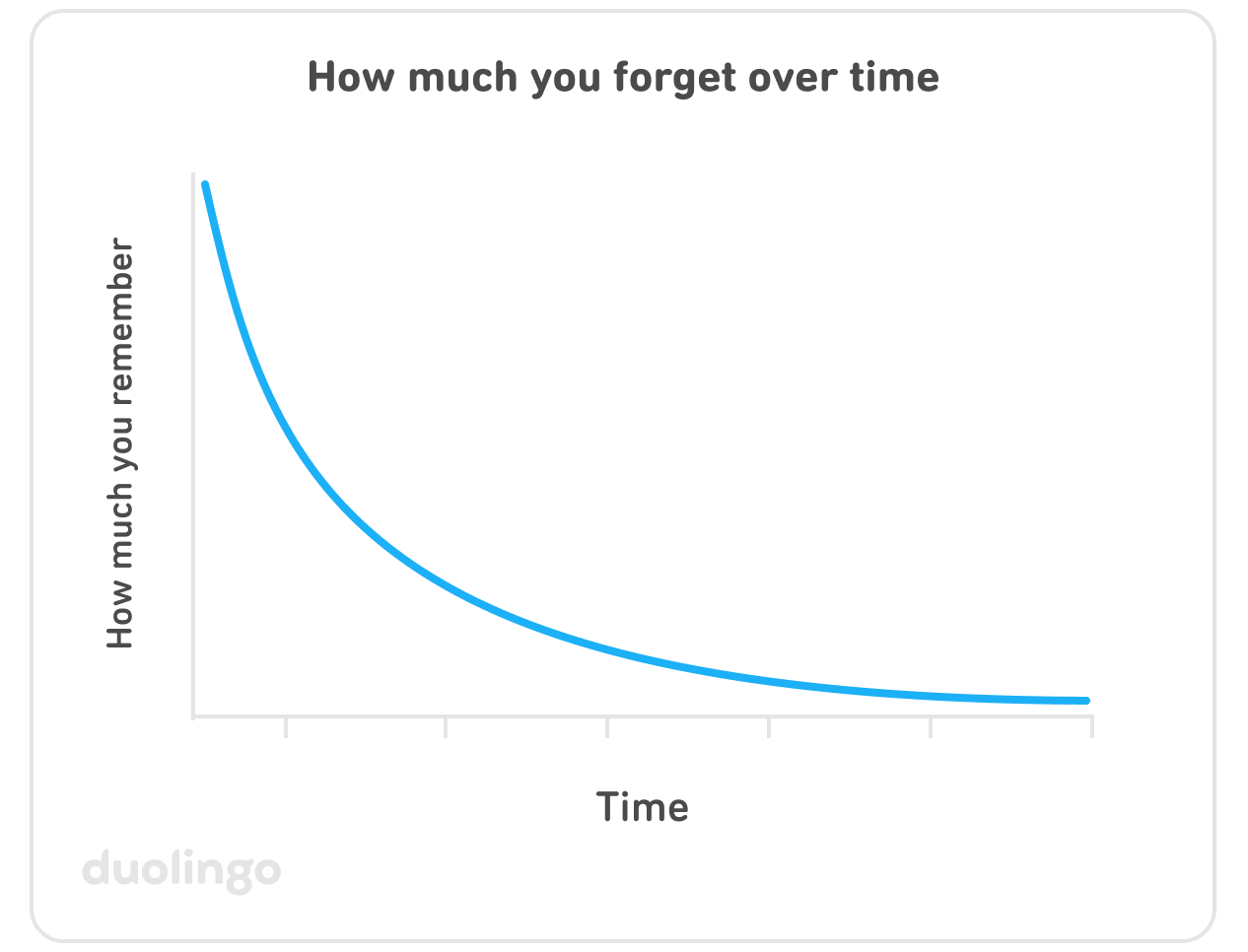
A 2022 meta-analysis of second-language experiments found a medium-to-large advantage for spaced over massed practice. Longer spacing helped delayed retention, but expanding schedules were not consistently better than equal ones. A good system matters more than a supposedly perfect interval formula.
Spaced retrieval is a memory technique, not a complete language method. Cards can preserve vocabulary, characters, collocations, and grammar examples. They cannot provide broad comprehension, turn-taking, or the experience of repairing a misunderstanding. Our spaced repetition guide covers the complete workflow.
7. Apps recombine old methods
Digital courses did not replace the history above. They packaged it. Multimedia made audio and images cheap, user data enabled adaptive sequencing, and smartphones made daily practice convenient. The interface changed more dramatically than the underlying learning mechanisms.
Rosetta Stone: the Direct Method on a screen
Rosetta Stone launched in 1992 and built its identity around immersion-based learning. Carefully sequenced images, words, and native-speaker audio encourage learners to infer meaning without translation. Grammar and syntax appear through examples rather than long explanations.
This approach works well for direct associations and beginner listening. Ambiguous images can also make an easy point harder than a short translation would. The old Direct Method tradeoff remains inside the software.
Duolingo: adaptive practice and gamification
Duolingo combines short lessons, translation, sentence construction, listening, speaking, adaptive review, and game-like rewards. It does not simply use spaced repetition to “memorize grammar.” Grammar is often encountered through recurring examples, while the system brings weaker material back through personalized practice.
Streaks, experience points, leagues, and rapid feedback address motivation and habit formation. They do not guarantee transfer to unscripted conversation. A learner can become efficient at selecting or reconstructing expected answers without spending much time formulating an original message.
Babbel and Busuu: structure plus practical dialogue
Babbel uses short structured lessons, explicit explanations, dialogues, and review. It sits closer to a modern coursebook than a pure immersion product. Busuu adds CEFR-oriented progression and exercises that other users can correct.
Both illustrate a broader digital pattern: combine grammar explanation, dialogue practice, audio, retrieval, and feedback instead of defending one historical method. The quality of the combination depends on what you actually produce, not the method label on the landing page.
8. Conversation access and AI tutors
The newest change is not a new theory of acquisition. It is access. Learners can now find a conversation partner, teacher, or simulated interlocutor at almost any time. This removes a constraint that shaped earlier methods: one qualified teacher could only work with a limited number of students.
Tutoring and language exchange platforms
italki and Preply connect learners with online tutors. A strong teacher can combine communicative practice, task-based work, explicit explanation, and corrective feedback around one learner’s goals. The platform supplies access; the tutor and lesson design determine the method.
Language exchanges offer less structure but more informal contact. Learners negotiate meaning with real people, encounter everyday registers, and practice turn-taking. The limitations are equally real: partners may not correct important errors, balance between languages can be difficult, and friendly conversation does not create a curriculum.
AI-assisted conversation
AI tutors make private, repeatable role-play available on demand. Speak builds lessons around spoken production, while ChatGPT can simulate a hotel check-in, adapt a dialogue, explain a correction, or generate examples from one recurring error.
A 2024 meta-analysis of AI in second-language learning reported positive pooled effects across varied interventions and outcomes. The studies differed in technology, duration, learner population, and measurement, so the result does not validate every AI tutor. Fast-changing systems can also produce confident but incorrect explanations.
AI works best as a practice and feedback layer. It gives you more speaking turns, controllable difficulty, and immediate examples. It does not reliably diagnose an entire learning path, reproduce a genuine relationship, or guarantee factual and linguistic accuracy. Our guide to using ChatGPT for language learning includes practical prompts and verification safeguards.
Which method develops which language skill?
Historical methods disagree because they optimize different jobs. Grammar-Translation builds explicit knowledge. Pimsleur trains oral recall. Comprehensible input develops understanding. Tutoring creates interaction. Spaced retrieval preserves selected material. Comparing them as if each promised the same outcome hides those differences.
| Goal | Most relevant methods | Current tools or formats | Main gap to cover |
|---|---|---|---|
| Understand grammar | Explicit instruction, Grammar-Translation, Michel Thomas | Structured courses, reference grammars, Babbel | Add timed use and feedback |
| Remember vocabulary | Spaced retrieval, Lexical Approach | Anki, SuperMemo, adaptive review | Put words inside meaningful contexts |
| Improve listening | Natural Approach, extensive listening, Pimsleur | Graded podcasts, LingQ, audio courses | Add varied speakers and active response |
| Improve pronunciation | Direct, Audio-Lingual, TPR, shadowing | Model audio, speech recognition, teacher feedback | Check transfer to spontaneous speech |
| Start speaking | Direct, Pimsleur, Callan, guided AI | Audio prompts, structured lessons, Speak | Move beyond rehearsed frames |
| Hold conversations | CLT, task-based learning, tutoring | italki, Preply, language exchanges | Add focused correction and review |
| Learn through content | Immersion, CLIL, extensive input | Books, podcasts, video, Language Reactor | Keep difficulty comprehensible |
| Receive immediate feedback | Tutoring, community correction, AI | Teachers, Busuu, ChatGPT | Verify accuracy and prioritize errors |
Which language learning method should you choose?
No historical method covers grammar, comprehension, memory, pronunciation, interaction, and correction equally well. Start with your bottleneck rather than a method identity.
- Absolute beginner: use a structured course, supported comprehensible input, and light retrieval. Free conversation is inefficient when you understand almost nothing.
- Analytical learner: keep explicit grammar and Michel Thomas-style reconstruction, then practice the same forms under time pressure.
- Conversation-focused learner: prioritize tutoring, task-based lessons, and role-play. Review recurring errors after the exchange.
- Independent learner: combine an Assimil- or Babbel-style course with spaced retrieval and level-matched content.
- Intermediate learner at a plateau: reduce beginner exercises. Add authentic input, longer conversations, and feedback on persistent gaps.
- Busy learner: use audio or micro-lessons during fragmented time, but protect one regular session for unscripted production.
The evidence also argues against purism. Meaning-focused input teaches vocabulary, but each encounter contributes only a little. Explicit instruction clarifies rules, but knowledge must become usable. Interaction supports development, but not every conversation supplies useful feedback. Spacing preserves memories, but only the memories you choose to practice.
Build a modern method stack
The most practical lesson from this history is to assign one resource to each learning job. A simple stack contains four parts:
| Learning job | Historical lineage | Modern practice |
|---|---|---|
| Build a language model through input | Natural Approach, immersion, extensive reading | Read, watch, or listen to material you mostly understand |
| Keep useful language available | Lexical Approach, Leitner, Pimsleur | Retrieve high-value phrases on a spaced schedule |
| Turn knowledge into action | Direct, CLT, task-based learning | Speak with a tutor, partner, or guided AI scenario |
| Notice and repair form | Grammar-Translation, Audio-Lingual, corrective feedback | Study short explanations and correct recurring errors |
For five weekly hours, a reasonable starting experiment is two hours of input, 75 minutes of interaction, one hour of form and pronunciation work, and 45 minutes of retrieval. These proportions are not a universal formula. Test them for several weeks against the skill you actually want.
If comprehension improves but speaking remains blocked, move time from input to tasks. If conversation flows but the same errors persist, add focused correction. If useful words disappear between sessions, increase retrieval rather than collecting more new material.
Old methods, new interfaces
The history of language learning methods is not a march from bad traditional teaching to perfect modern technology. Each generation identified a real blind spot. Grammar study clarified form. Direct teaching restored speech. Audio courses scaled listening. Communicative methods restored meaning. Input approaches expanded exposure. Spaced retrieval addressed forgetting. Apps and AI made these practices easier to access and combine.
If you are starting today, choose one comprehensible input source, one retrieval system, one regular conversation format, and one source of reliable correction. That stack is more complete than any single branded method. Turn it into a schedule with our daily language learning routine or browse the Language Tools Directory for tools that match each job.