
You can now learn a language with AI that holds a real conversation, drills your weak grammar points, or turns a podcast into custom study notes. The catch: most listicles on this topic are written by the makers of one of the apps. They all rank their own product first.
In this guide, you will find 12 tested AI tools sorted by use case, a comparison table, current May 2026 pricing, and one honest pick for every learner profile. We do not own any of the tools below.
Quick comparison: 12 AI tools at a glance
| Tool | Best for | Free option | Price (as of May 2026) |
|---|---|---|---|
| Langua | Deep, natural AI conversation | 5- or 7-day free trial | $19.99–$29.99/mo or $149.99–$199.99/yr |
| Speak | Structured AI practice for beginners | 7-day free trial | $83.99/yr Premium; $164.99/yr Plus |
| Praktika | Engaging avatar-based AI tutor | 7-day free trial | $39.99/3 mo; $99.99/yr |
| Univerbal | Gamified daily missions | 2-day trial, no card | $14.90/mo; $120/yr |
| TalkPal | Rare languages (80+ supported) | Free plan + 14-day trial | $14.99/mo; $89.99/yr |
| Emma | Free iOS-first AI tutor | Free with limits | $17.99/mo; from $79.99/yr |
| Duolingo Max | AI add-on if you already use Duolingo | None for AI features | Around $30/mo |
| ChatGPT | Flexible free practice with custom prompts | Yes, full free tier | Plus $20/mo |
| Claude | In-depth grammar explanations | Yes, free tier | Pro $20/mo |
| Memrise (MemBot) | AI coach inside a vocabulary app | Free with limits | Pro from around $8.99/mo |
| DeepL | Most accurate AI translator | Yes, generous free tier | Starter from $8.99/mo |
| NotebookLM | Turn any text into AI audio summary | Yes, fully free | Free |
How we chose these tools
This article is fully independent. We do not own any of the apps below, take no commissions, and have not been paid by any tool maker. To make the list, each tool had to pass three filters:
- AI is core, not a marketing label: features must use generative AI or speech models, not just rule-based logic.
- Available outside the United States: works for most readers, with multi-language support.
- Verifiable pricing on the official site as of May 2026.
Tools were tested or reviewed across English, Spanish, French, and Italian. Where a competitor’s claim conflicted with our experience, we say so.
AI conversation apps: practice speaking without a tutor
These apps are the closest thing to a tutor session. You speak, the AI replies, corrects, and keeps the conversation flowing. Each one has a different style and serves a different learner.
Langua: best overall for natural conversation
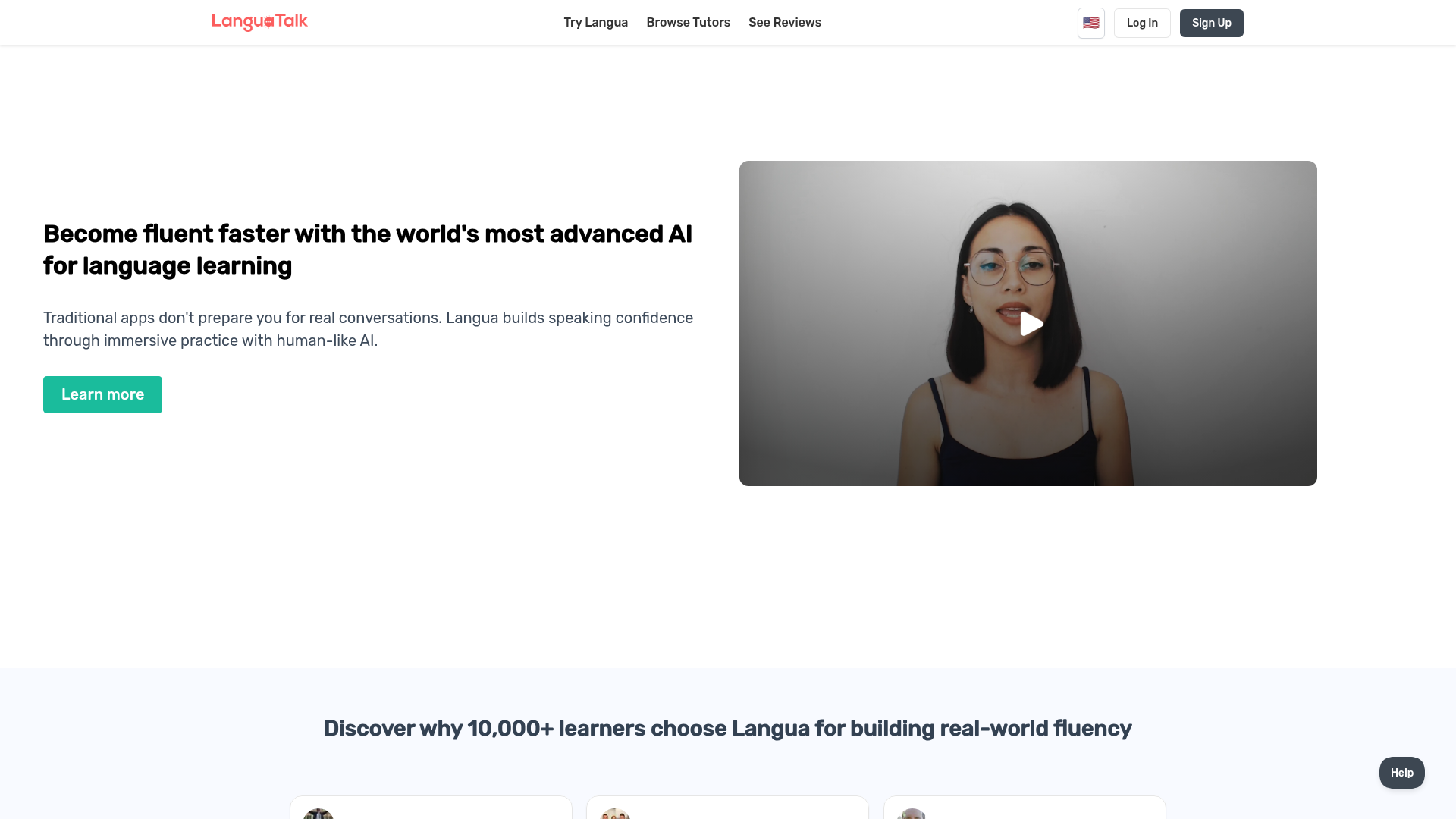
Langua is currently the best AI conversation app on the market. The voices are cloned from real native speakers, and the conversation flow feels close to a real call. In testing, no other app got closer to the feeling of speaking with a human.
What sets it apart: detailed feedback after every chat, a hands-free Call Mode, and smart vocabulary integration that weaves your saved words into future conversations.
What could be better: structure is mostly up to you. Beginners who want a clear path will hit friction. The 32 guided lessons help, but the app shines once you can already produce sentences.
Pricing (May 2026): $19.99/month for Standard, $29.99/month for Unlimited. Annual plans run $149.99 and $199.99. A 5-day or 7-day free trial covers most signups.
Best for: intermediate and advanced learners who want depth and freedom.
Speak: best for structured AI-led beginners
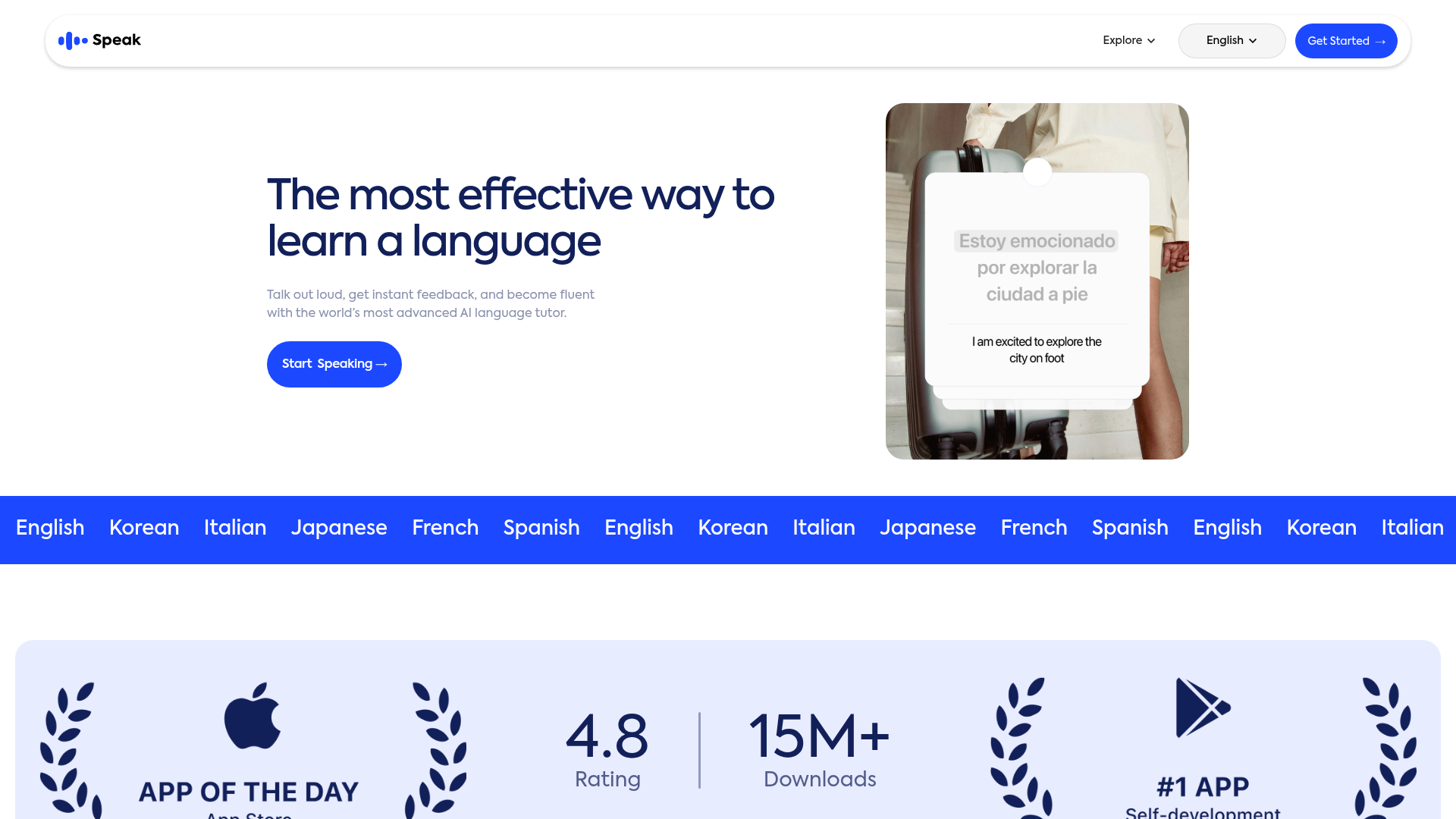
Speak wins where Langua leans hands-off. Its beginner course features short video lessons with a real teacher. The app then drills you through the same patterns until they stick. It also tracks your most frequent mistakes and generates new sentences targeted at those weak spots.
What sets it apart: speech-recognition drills, hands-free practice for commutes, and a Premium Plus tier that adapts daily content to your gaps.
What could be better: only 6 languages so far (Spanish, English, French, Italian, Korean, Japanese). German and Portuguese are announced. Free conversation depth is shallow; the app rewards you for following its track.
Pricing (May 2026): $83.99/year for Premium, $164.99/year for Premium Plus. A 7-day free trial covers all features.
Best for: complete beginners and busy learners who want a clear daily routine.
Praktika: best avatar-based AI classroom
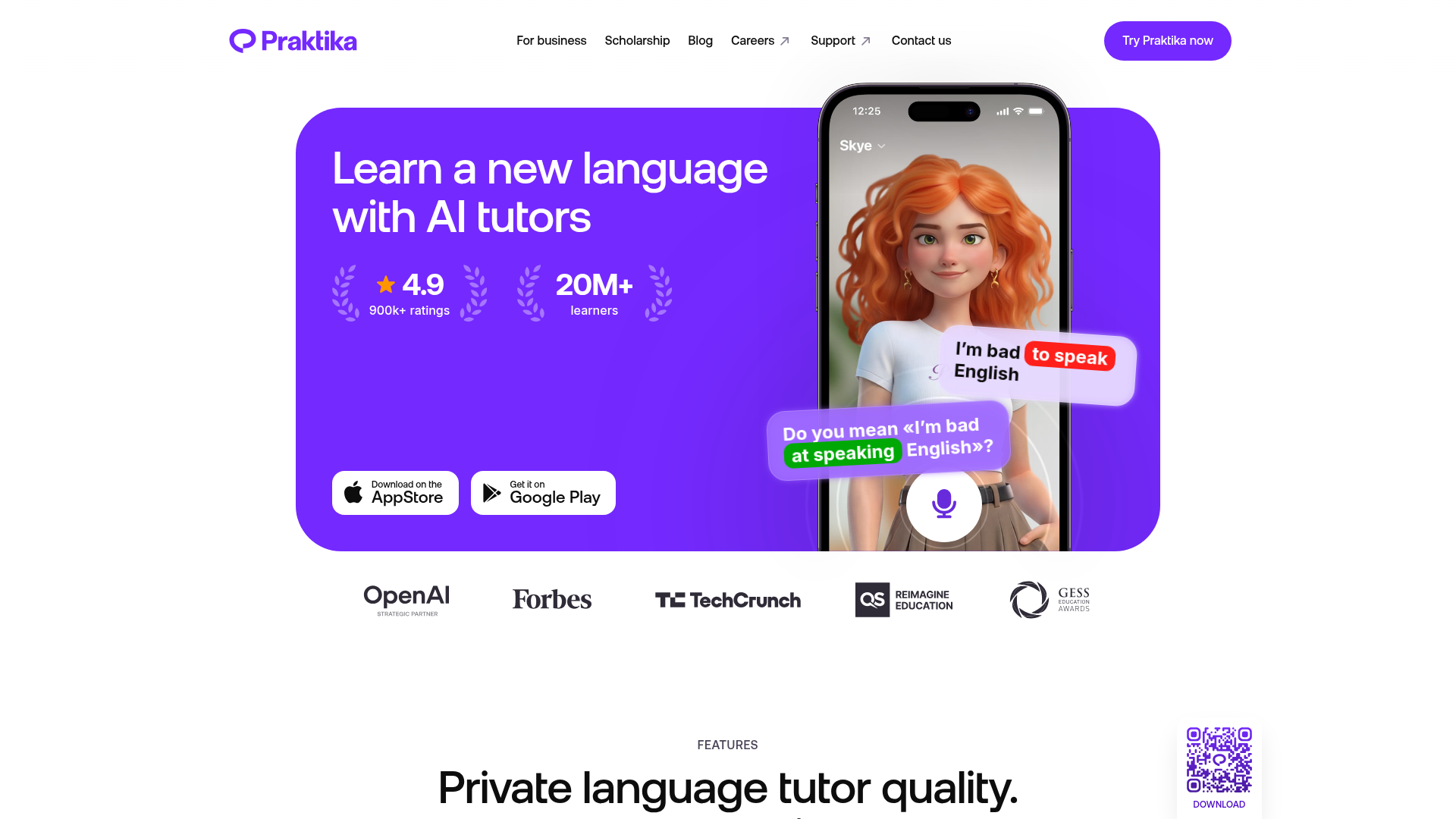
Praktika replaces the chat bubble with an animated AI tutor. It sounds gimmicky on paper. In practice, the avatars deliver fast, expressive replies, and the topic library covers around 140 conversation prompts.
What sets it apart: distinct avatar personalities, classroom-style lessons, and thorough onboarding that tunes content to your interests.
What could be better: the rigid path resets if you switch goals. Vocabulary is not stored for review. Feedback can be missed mid-conversation. There is no audio-only mode.
Pricing (May 2026): $39.99 for three months, $99.99 for one year. A 7-day free trial is available.
Best for: learners who want a guided, lighter experience with character-driven interaction.
Univerbal: best gamified mission system
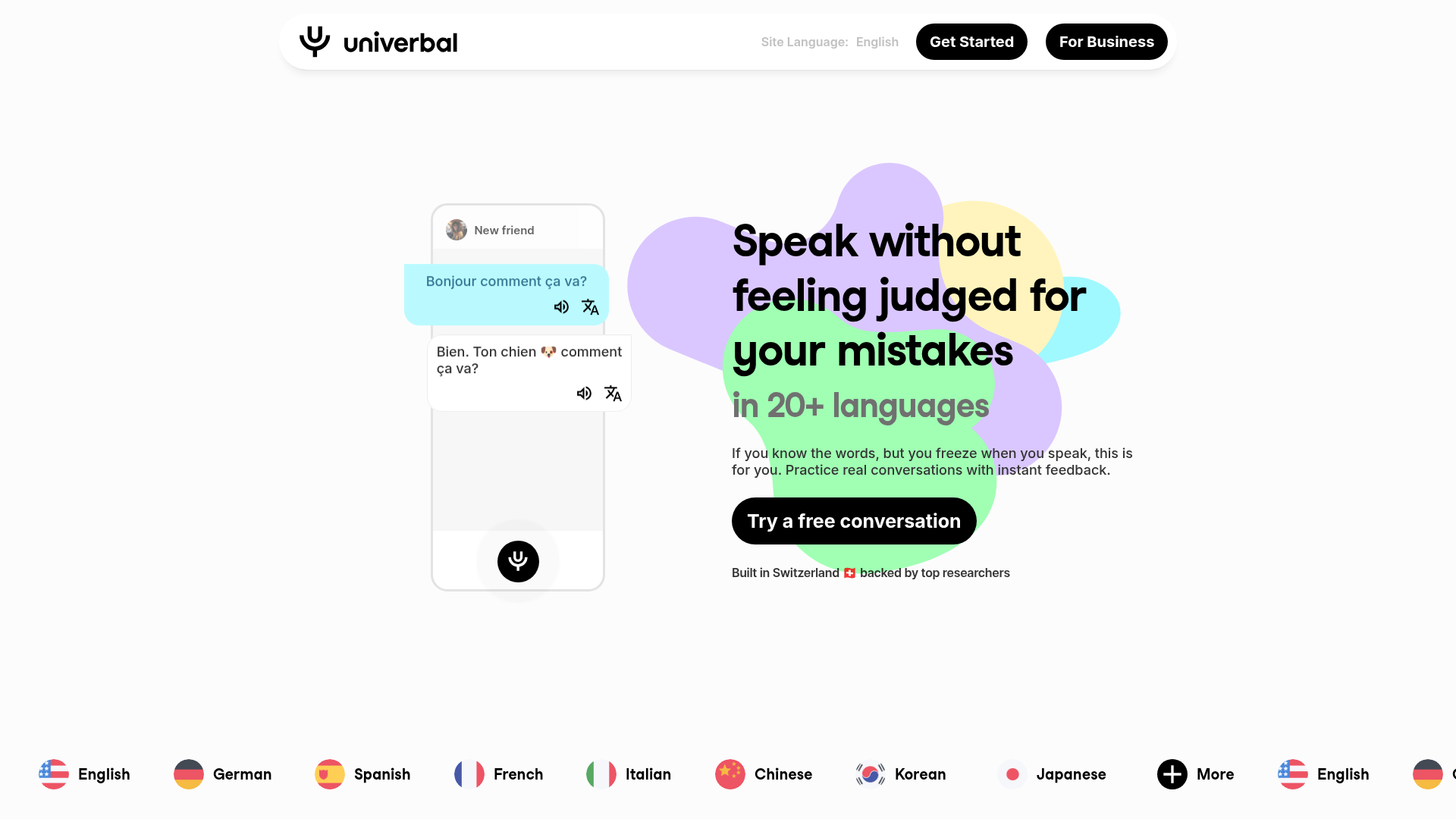
Univerbal builds conversations around daily missions. You pick interest areas like food, tech, or travel. The app then generates lessons with three tasks to complete inside each chat. A progress bar tells you when a mission is done.
What sets it apart: the mission structure adds a clear endpoint to otherwise open-ended conversations. Mistake tracking and a slower, low-pressure pace round out the experience.
What could be better: voices are uneven across languages. Audio recording occasionally drops mid-conversation. The structured path feels best at intermediate level.
Pricing (May 2026): $14.90/month, $120/year. Two-day free trial without a credit card.
Best for: gamification fans who want a calm, mission-led routine instead of free chat.
TalkPal: best for rare languages
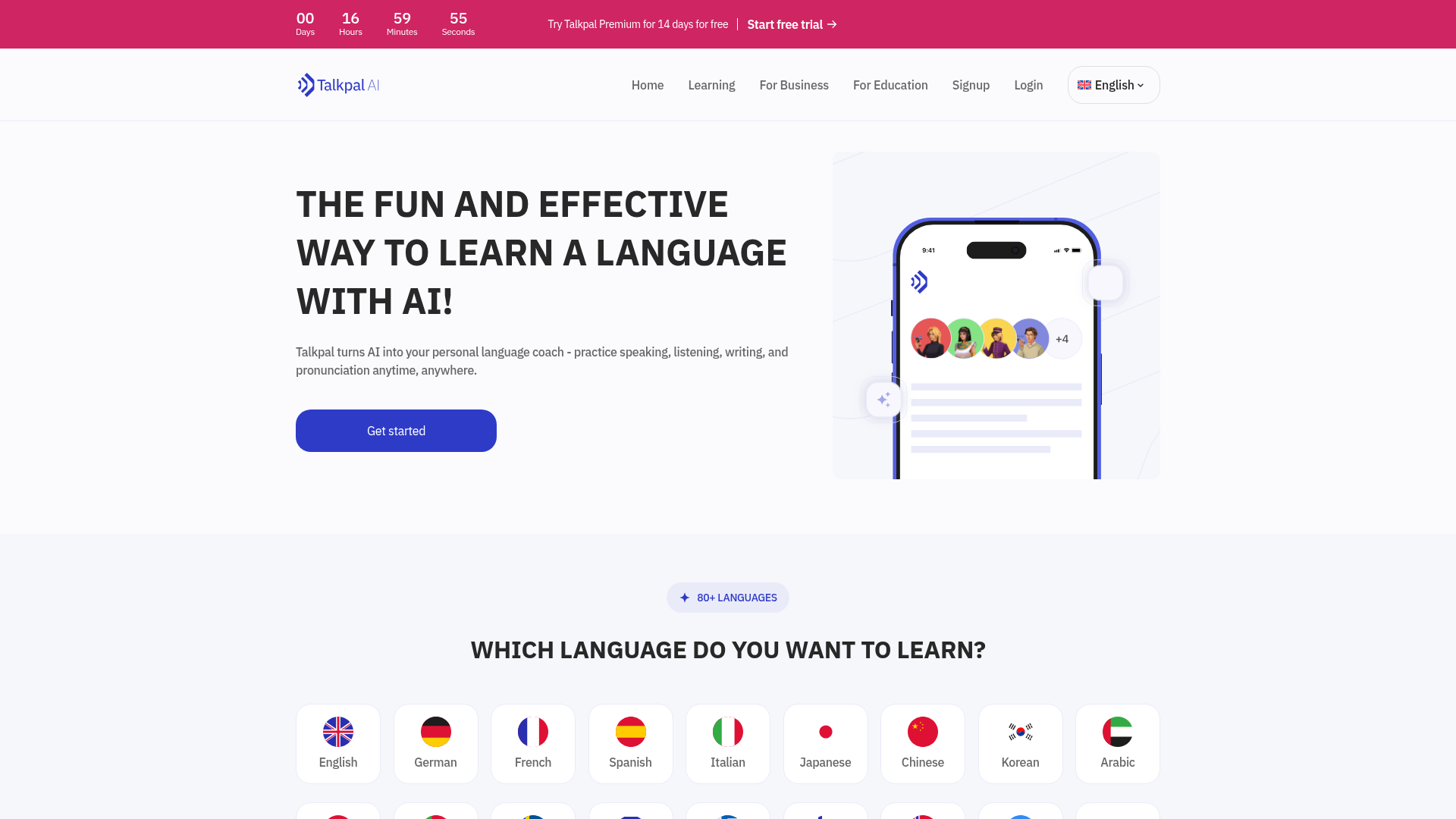
TalkPal supports more than 80 languages. The list includes Cantonese, Welsh, Georgian, and Catalan. Most competitors stop at 6 to 25 languages. If you study a less common language, TalkPal may be your only credible AI option.
What sets it apart: language coverage is unmatched. The app also offers role-plays with historical figures, picture description, and a structured beginner path.
What could be better: voice quality is the weakest of the major apps. It sometimes switches gender mid-message. Pronunciation feedback is unreliable, and quality varies a lot by language.
Pricing (May 2026): $14.99/month, $89.99/year. A 14-day free trial plus a free plan with a 10-minute daily chat limit.
Best for: learners of less-served languages and budget-conscious users.
Emma: best iOS-first AI tutor
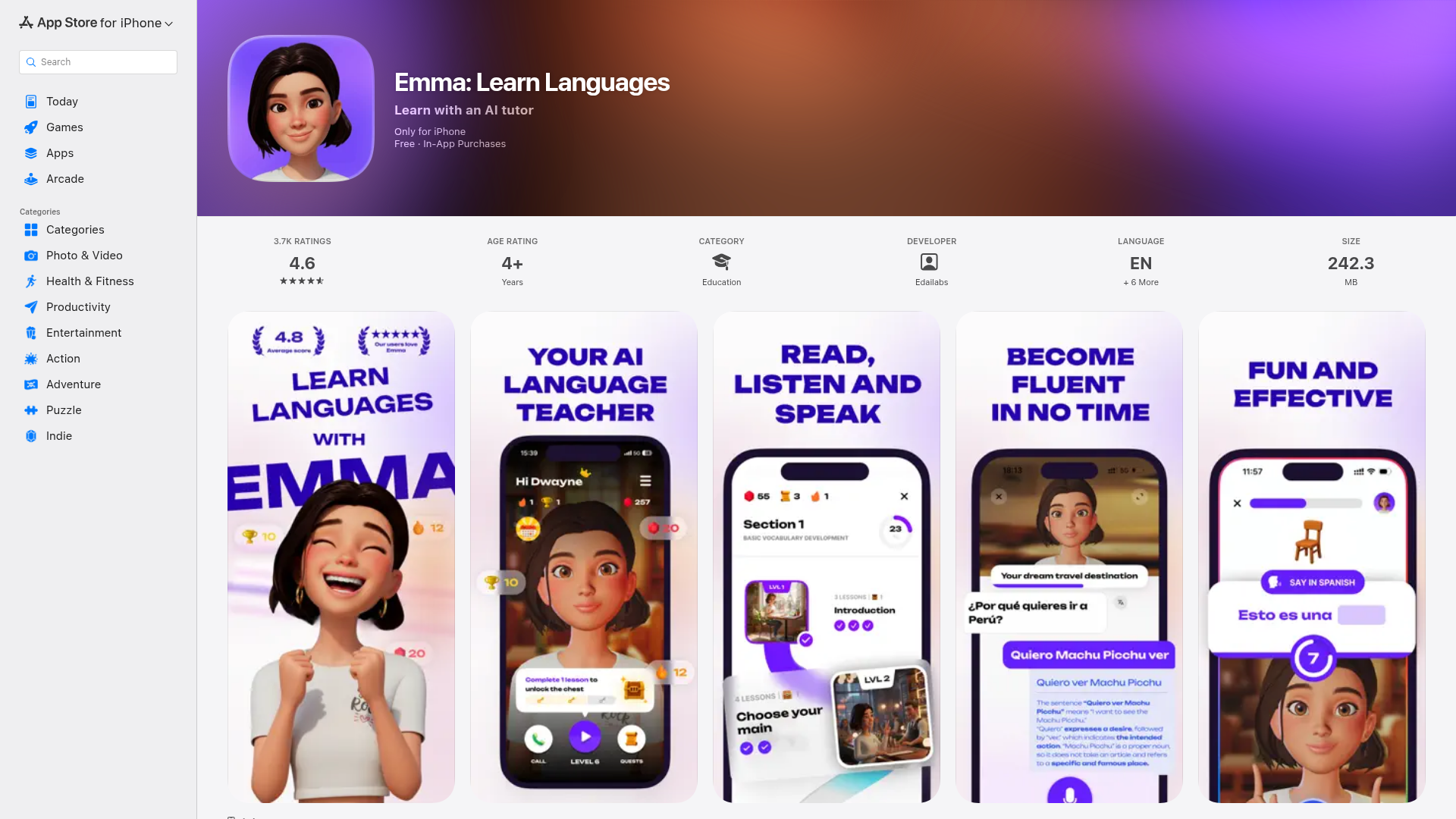
Emma is an iPhone-only AI tutor by Edailabs that teaches through interactive scenarios. The app is small (under 250 MB), launched fast on the App Store, and now sits at 4.6 stars across 3,700+ ratings.
What sets it apart: a generous free tier, personalized onboarding, and a tight scenario library covering education, travel, and dating. The conversational flow is genuinely lightweight, which suits short daily sessions.
What could be better: iPhone only at the time of writing. Some users report progress resets and uneven Spanish gender feedback. The paid tiers are confusing, ranging from $14.99/week up to $99.99/year depending on the offer.
Pricing (May 2026): free with limits; Pro plans from $17.99/month or $79.99–$99.99/year via in-app purchase.
Best for: iPhone users who want a low-friction first AI tutor across seven supported languages.
Duolingo Max: best AI add-on if Duolingo is your home
Duolingo Max bolts AI features onto the standard Duolingo path. The most useful are Explain My Answer (detailed feedback on each exercise), Roleplay (scenario chats), and Video Call with the animated character Lily.
What sets it apart: tight integration with the rest of Duolingo’s curriculum and gamification.
What could be better: Video Call is limited to one character (Lily) and only a handful of languages. Conversation depth lags behind dedicated apps like Langua and Praktika. The price is steep.
Pricing (May 2026): around $30/month, varying by region.
Best for: existing Duolingo users who want AI features without leaving the app.
General-purpose AI as your tutor
Specialised apps win on user experience, but raw chat models still pull weight. Two of them deserve a place in your toolkit.
ChatGPT: best free option for flexible practice
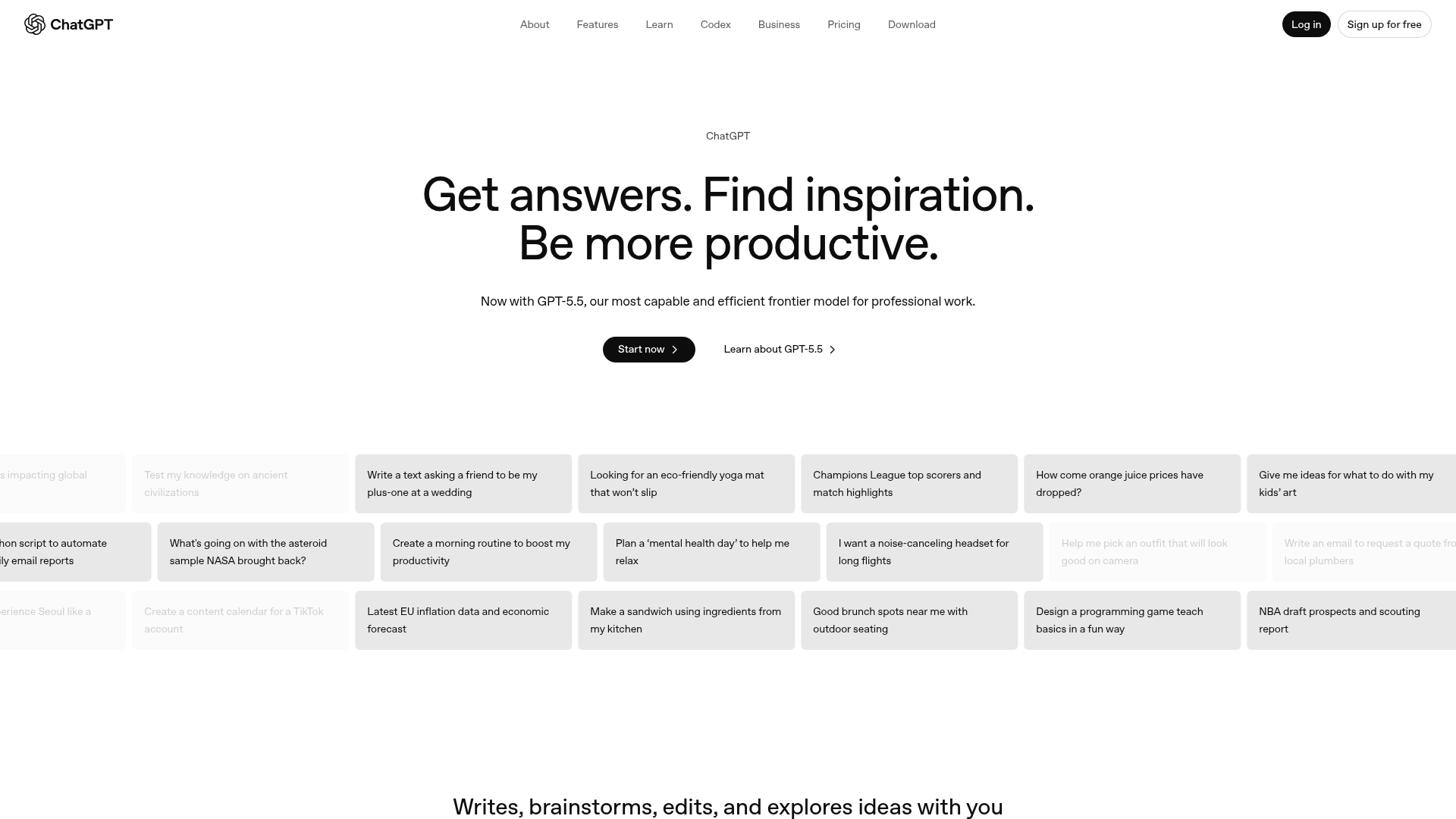
ChatGPT remains the most powerful free AI you can put to work on a language. It writes drills, explains rules, plays roles, and corrects on demand. The free tier is generous. The Plus tier ($20/month) gives you access to the latest models and longer conversations.
Strengths: unlimited prompt flexibility, broad language support, and depth at advanced levels. With a clear system prompt, you can replicate most of what dedicated apps charge for.
Weaknesses: voice mode cuts you off mid-sentence. Transcripts and audio cannot run side by side. You must remind it to correct you. Quality drops sharply for low-resource languages.
Pricing (May 2026): free; Plus $20/month.
Best for: advanced learners who write good prompts, or anyone on a tight budget.
Claude: best for in-depth grammar explanations
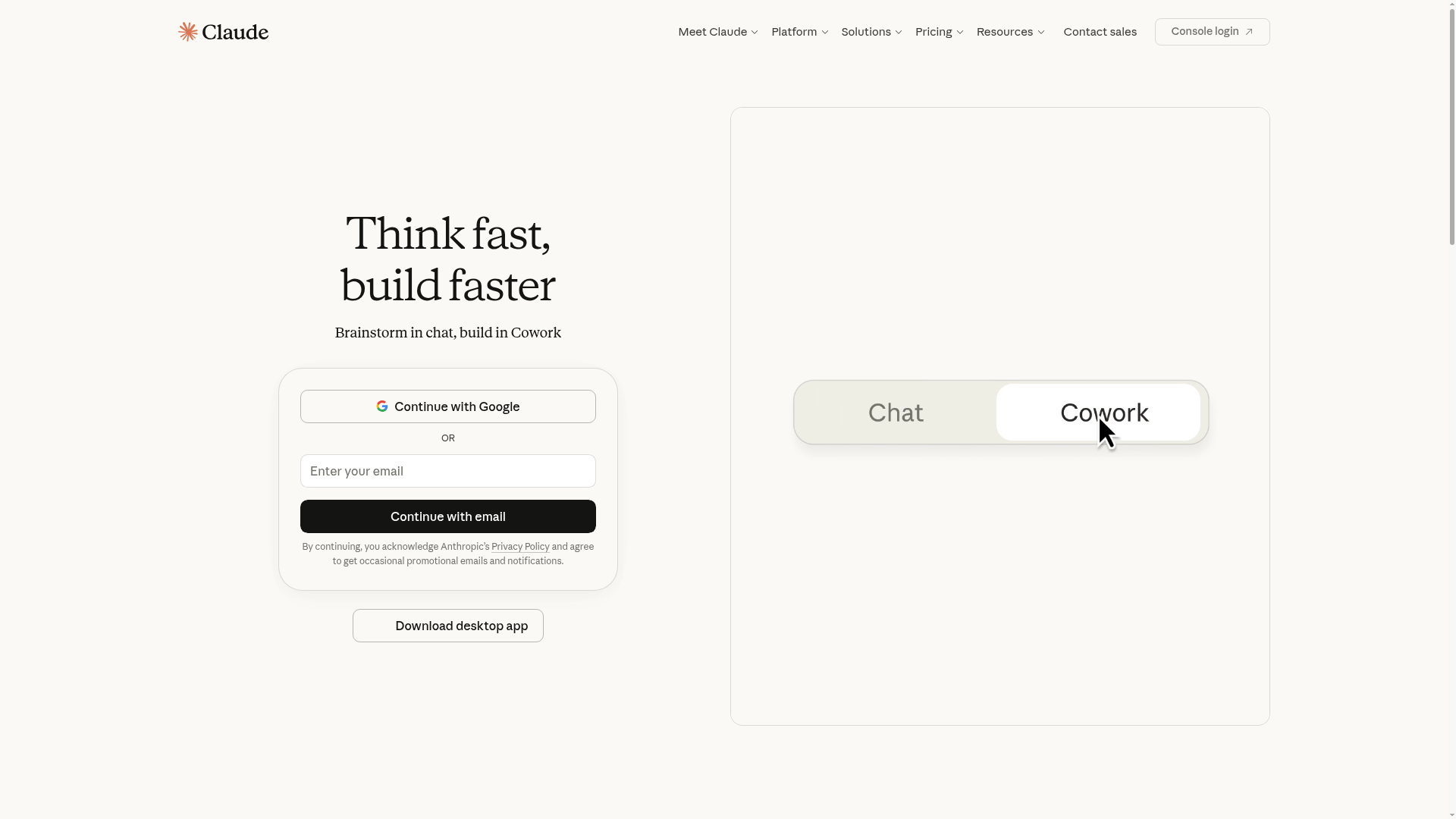
Claude by Anthropic is the model we reach for when grammar gets tricky. It tends to give longer, more nuanced explanations than ChatGPT. Furthermore, the free tier handles long passages well, which suits parsing dense texts or comparing translations.
Strengths: thoughtful grammar breakdowns, careful corrections, and strong handling of literary or technical texts.
Weaknesses: no native voice mode, fewer integrations, and a more limited free tier on heavy days.
Pricing (May 2026): free; Pro $20/month.
Best for: intermediate and advanced learners who use AI mostly to understand grammar and texts.
AI inside vocabulary apps
Memrise (MemBot): best AI coach bundled with an SRS app
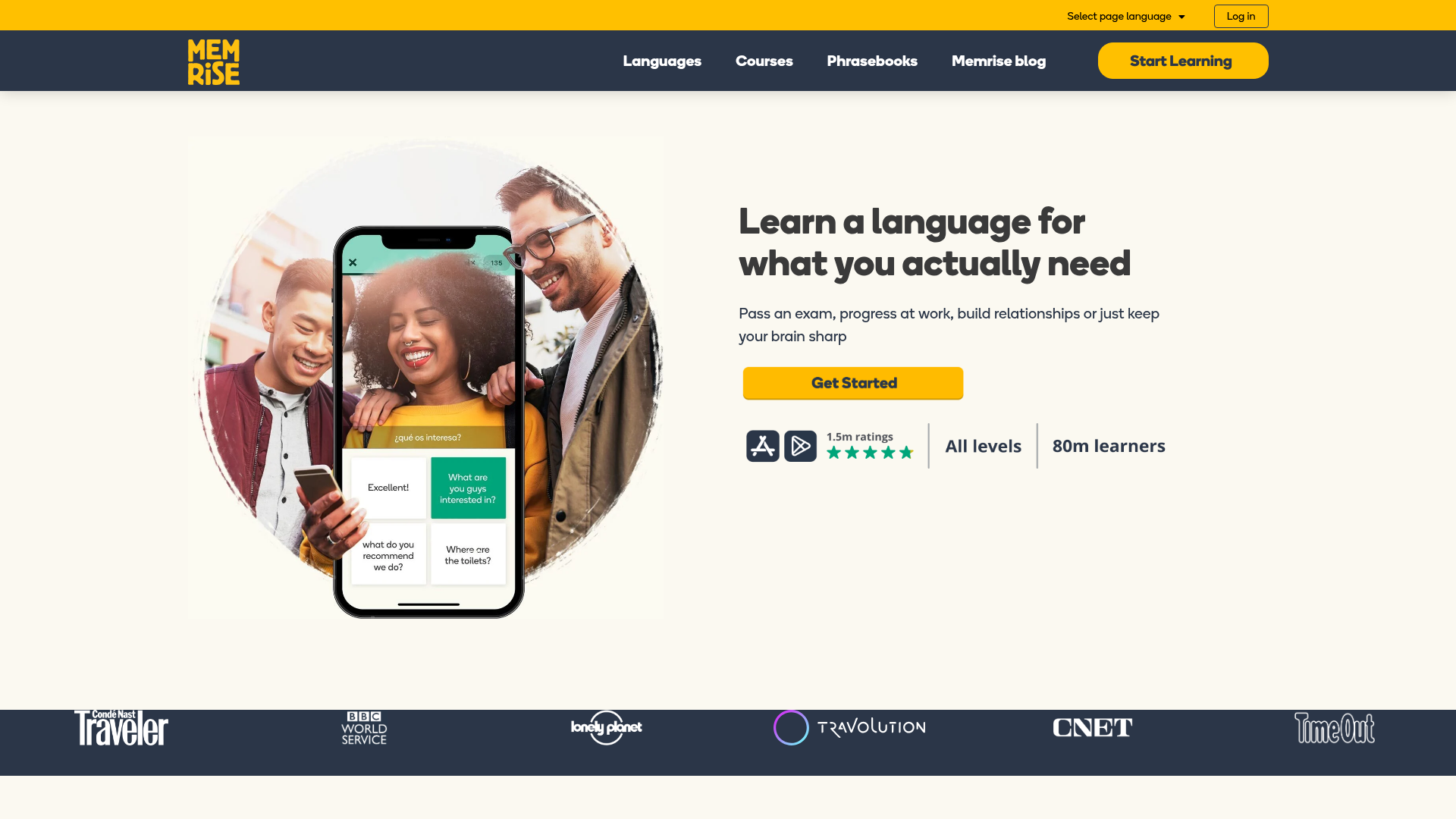
Memrise added an AI coach called MemBot to its vocabulary curriculum. The bot understands written input, corrects accents and small grammar slips, and adds a conversational layer to your spaced repetition routine.
Strengths: accurate written feedback, smart corrections (it added missing accents in our French tests), and tight integration with Memrise’s video and vocabulary system.
Weaknesses: chats are short, even on Pro. MemBot is an add-on rather than the core product, so depth lags behind dedicated apps.
Pricing (May 2026): free tier available; Pro from around $8.99/month, with annual and lifetime options.
Best for: learners who already use Memrise and want a small conversation layer on top.
AI for translation and listening
DeepL: best AI translator for nuance
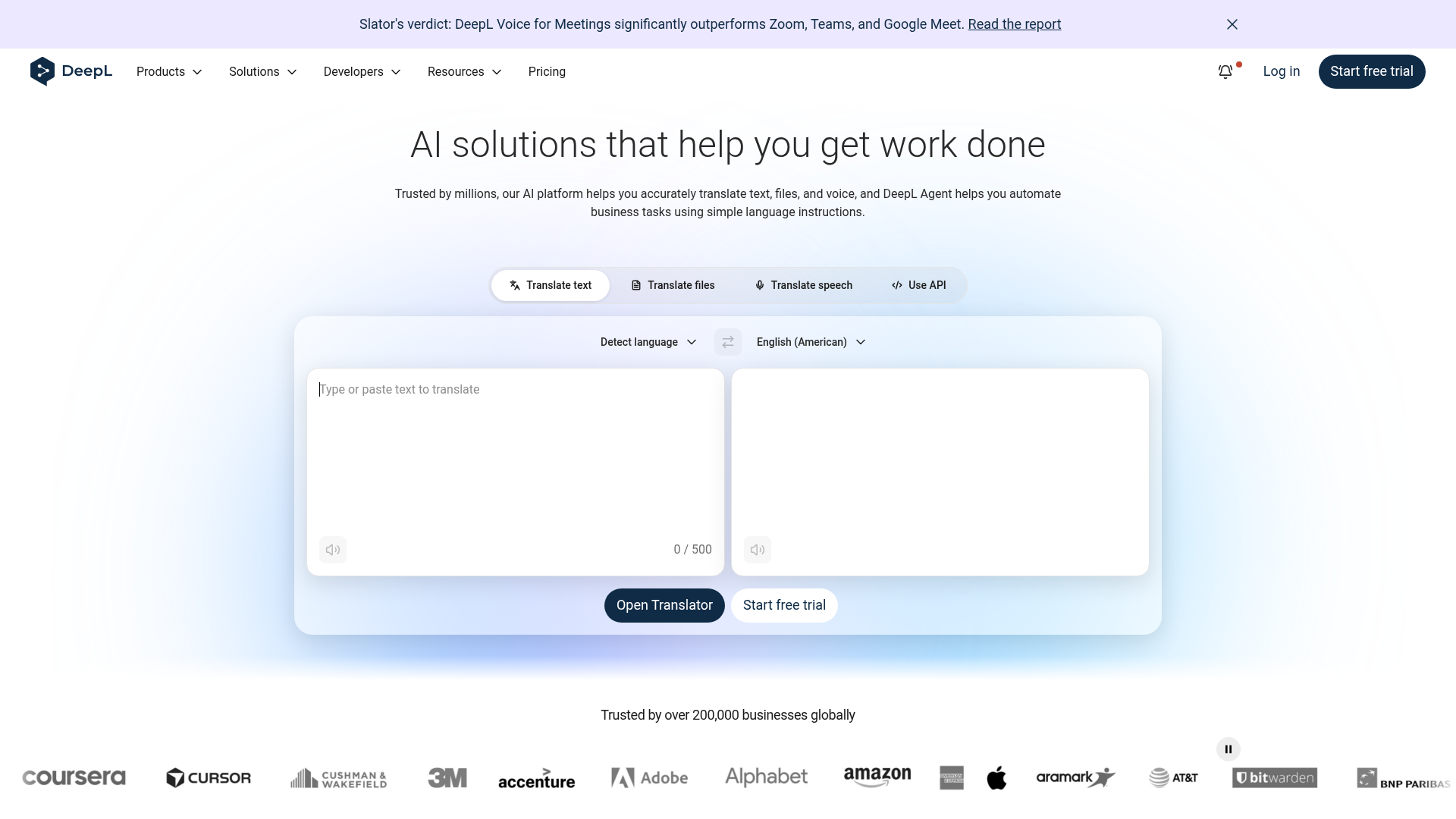
DeepL is the translator you reach for when Google Translate sounds too literal. It catches register, idiom, and sentence flow better than the alternatives, especially across European languages.
Strengths: nuanced output, strong long-form context, and a glossary feature that locks in domain-specific translations.
Weaknesses: limited language coverage compared to Google Translate. The free tier caps document size.
Pricing (May 2026): generous free tier; Starter from $8.99/month.
Best for: any learner who reads or writes in their target language and needs a reliable translation check.
NotebookLM: best AI for turning content into audio
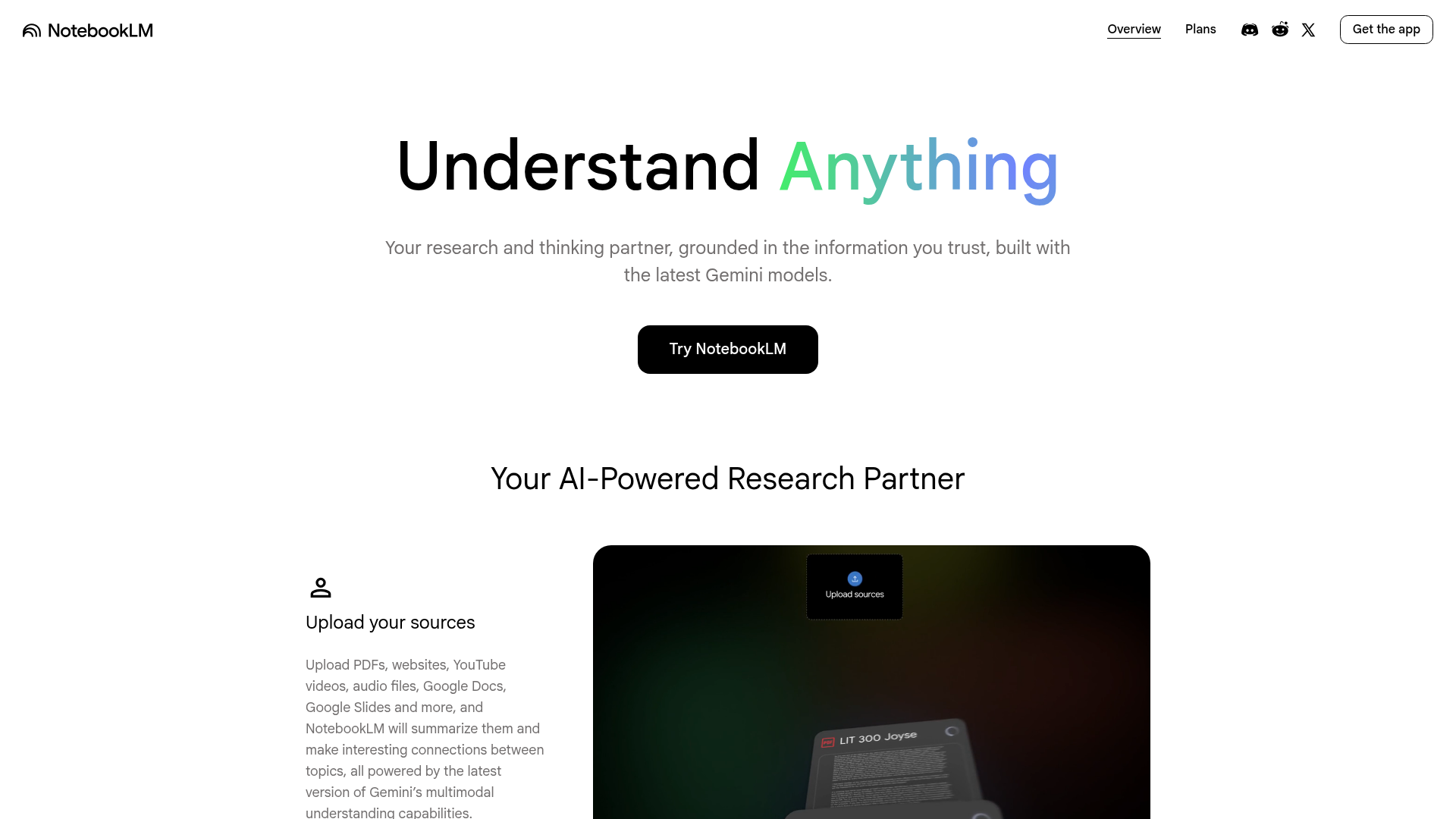
NotebookLM by Google takes any text (article, PDF, transcript) and generates a podcast-style audio summary, plus a Q&A interface. For language learners, this means you can turn a French article into a clear English briefing, then re-read the original in context.
Strengths: free, fast, and surprisingly natural audio. Useful for advanced listening prep when content is dense.
Weaknesses: the generated podcast is currently English-only. Its main use is to scaffold comprehension, not to produce target-language audio.
Pricing (May 2026): free.
Best for: advanced learners who want to compress dense reading into listening prep.
Final recommendation
For most serious learners in 2026, the right setup is two tools, not one. Use Langua for deep, free-form conversation. Pair it with Speak for structured drills and fast spaced repetition. If your budget is tight, start with ChatGPT and a clear system prompt. You can upgrade once the limits start to bite.
To keep AI practice grounded, balance it with a tested vocabulary system. Anki is still the gold standard for spaced repetition, and it costs nothing on most platforms. If your progress feels stuck rather than slow, see our guide on how to overcome a language learning plateau for tactics that work alongside any AI app on this list.