Free
Free
- 44 lessons following Deshpande's Saṃskṛtasubodhinī
- Paradigm and sandhi tables
- Audio, flashcards, quizzes and short stories
Introductory Sanskrit is a free website course built for Columbia's elementary Sanskrit class by lecturer Guy Leavitt. It follows Deshpande's Saṃskṛtasubodhinī over 44 lessons, with paradigm tables, sandhi charts, audio, flashcards and quizzes.
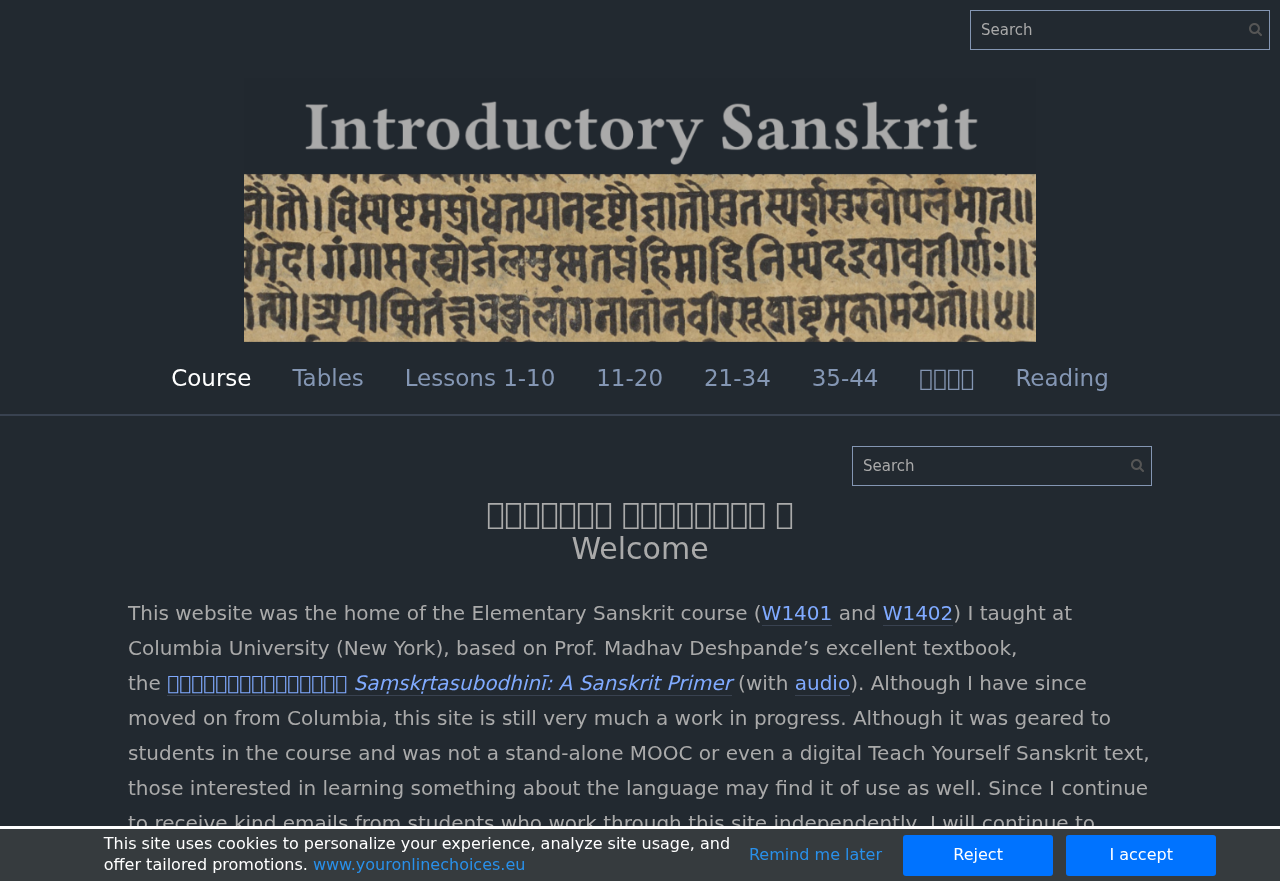
Introductory Sanskrit is a companion website for a university elementary Sanskrit course that works through Madhav Deshpande's primer lesson by lesson. It builds grammatical knowledge, script reading, pronunciation and translation skills. It stands apart by explaining the general rules by which Sanskrit forms are made, such as how first-class verbs are built, which the author notes the textbook often leaves unexplained because class time went to using the language.
The site was built for beginners enrolled in an elementary Sanskrit course and assumes the learner is working through Deshpande's Saṃskṛtasubodhinī. The author says it is not a stand-alone online course or a self-teaching text. Independent learners do use it, though, and it suits students who have the textbook and want fuller explanations of morphology, extra drills and recorded paradigms. Teachers using Deshpande may find it useful as a supplement. Learners using the Goldmans' Devavāṇīpraveśikā may also benefit, since the author is adding handouts he originally developed for that textbook.
Learners follow the lesson sequence of the textbook. It starts with sounds and script, moves through cases, verb classes, pronouns and sandhi, and continues to participles, compounds, the perfect, the aorist and derived verbs such as desideratives and denominatives. Each lesson gathers overviews of the grammar, handouts, exercises and, for many lessons, flashcards. Learners can refer to reference tables for paradigms and sandhi while studying and test themselves with quizzes and exams. Graded readings follow the grammar lessons. The author describes the site as a work in progress and continues to add video mini-lectures, overviews, audio and handouts. Some videos are marked as restricted.
Compare the available plans and their included features.
Free
5 tools cover Sanskrit in the directory.

